3 Key Sustainability Lessons from ABTT Theatre Show 2026
Following ABTT Theatre Show 2026, TAZAAR reflects on sustainability, asset management, equipment lifecycles, and how Digital Product Passports could help theatres make better use of technical equipment.

Lisa Stafford
The ABTT Theatre Show has always been a valuable opportunity to connect with the theatre community, understand industry challenges, and explore practical solutions for the future. This year's event was no exception.
Over two days, conversations repeatedly returned to three connected themes: sustainability, asset visibility, and extending the life of technical equipment.
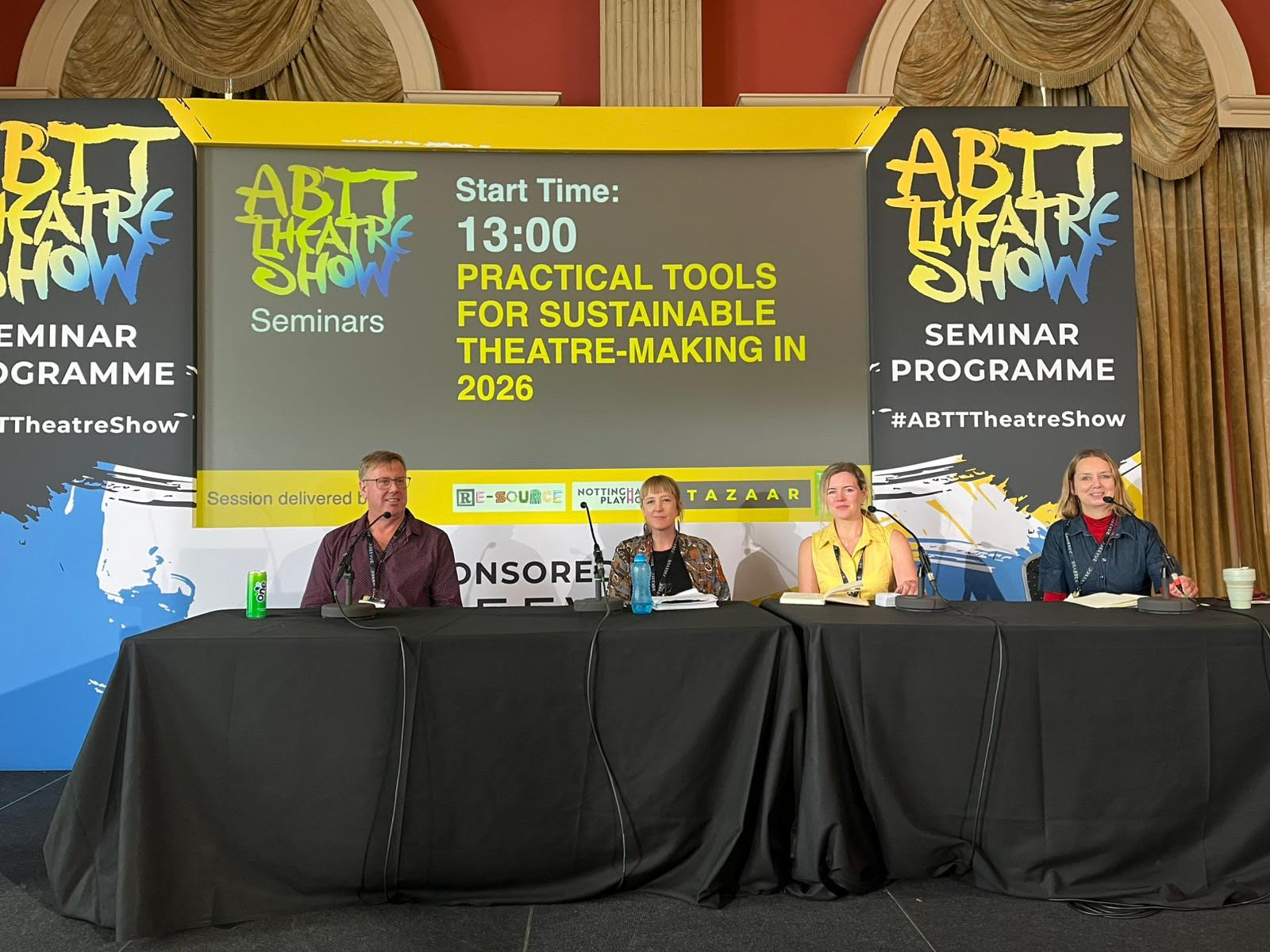
One of the highlights was a panel discussion hosted by Theatre Green Book titled Practical Tools for Sustainable Theatre Making in 2026, where Lisa Stafford, CEO and Co-Founder of TAZAAR, joined industry experts to discuss how theatres can make better use of the equipment they already own.
The discussion revealed a simple but important truth: sustainability in theatre is often less about buying new products and more about making better use of existing ones.
1. Sustainability Starts with Knowing What You Have
A recurring challenge raised during the panel was that many theatres struggle to fully understand what equipment they own, where it is located, and what condition it is in.
Theatre Green Book highlighted several barriers to equipment reuse, including:
Limited storage space
Difficulties locating equipment
Lack of asset visibility
Uncertainty around maintenance history
Challenges sharing equipment between organisations
Limited information about responsible disposal at end of life
One particularly interesting example came from a Nottingham Playhouse that had transformed the way it managed storage.
Rather than treating storage as an afterthought, they invested in a dedicated facility close to the theatre where props, costumes, and technical equipment could be properly organised and managed.
The benefits extended far beyond sustainability.
Staff became more efficient. Teams gained a better understanding of what assets were available. Equipment became easier to locate and reuse. The Play House even created new revenue opportunities by renting storage space and equipment to others.
The lesson was clear: before theatres can reuse assets, they need visibility of what they already own.
2. Why Are Theatres Replacing Equipment Too Early?
One of the questions explored during the panel was why valuable technical equipment is often replaced sooner than necessary.
The answer appears to be a combination of people, infrastructure, and systems.
People
Theatres often rely heavily on tacit knowledge.
One technician knows when a fixture was last serviced. Another remembers where a piece of equipment is stored. Someone else knows which products have been repaired and which should be retired.
When staff move on, much of this knowledge leaves with them.
Infrastructure
Storage remains a major challenge.
Equipment can easily become misplaced between productions, stored in temporary locations, or forgotten entirely. In some cases, theatres replace equipment simply because they believe it is missing.
In reality, it may still be somewhere within the building.
Systems
Many theatres believe they have a clear understanding of their inventory, but few maintain a complete and accurate record of every asset and its history.
This becomes particularly important when considering that much of the equipment used in theatres today is purchased second-hand.
High-end equipment often begins life in touring productions, where safety standards and technology refresh cycles are more demanding. Once replaced, that equipment frequently finds a second life in regional theatres, community venues, schools, and arts organisations.
The challenge is that when equipment changes hands, its history rarely follows.
New owners often have little visibility of:
Previous ownership
Maintenance records
Repair history
Service intervals
Remaining useful life
As a result, companies are forced to make decisions based on assumptions rather than evidence.
3. The Missing Service History Problem
One of the ideas discussed during the session was the role Digital Product Passports could play in supporting longer equipment lifecycles.
A useful comparison is the service history of a vehicle.
Most people would be hesitant to purchase a used car without knowing its ownership history, maintenance records, or servicing schedule.
Yet this is exactly how many theatres acquire technical equipment today.
Some theatre lighting fixtures, audio systems, and production equipment remain in active use for ten years or more before being passed to a new owner. Despite their value, they often carry little or no documented history.
Digital Product Passports have the potential to change that.
By linking a physical product to a digital record through embedded QR or NFC technology, theatres can access information such as:
Product identity and serial number
Ownership history
Service records
Repairs and modifications
Maintenance schedules
End-of-life guidance
Manufacturer support information
In practical terms, this creates a living service history that stays with the product throughout its lifecycle.
For theatres, this could support better maintenance decisions, improve confidence when purchasing second-hand equipment, and help theatres determine when products should be reused, resold, donated, or responsibly recycled.
It also creates greater accountability for assets, reducing the likelihood of equipment becoming lost, forgotten, or prematurely replaced.
Looking Beyond Compliance
While Digital Product Passports are often discussed in relation to future legislation and sustainability requirements, the conversations at ABTT demonstrated that their value extends far beyond compliance.
Theatres are increasingly being asked to demonstrate sustainability credentials, reduce waste, and maximise the value of existing resources.
Achieving these goals requires better information.
If equipment worth significantly more than a family car can spend a decade moving between productions, venues, rental companies, schools, and community theatres, then perhaps it deserves the equivalent of a service book too.
The technology exists to make this possible.
The next step is for the industry to start asking for it.
Final Reflections from ABTT
One of the most valuable insights from the show was seeing how seriously the theatre industry is taking sustainability.
Many theatres are moving away from ownership models and increasingly renting equipment for productions. This reduces storage and maintenance burdens while ensuring access to modern technology when needed.
At the same time, sustainability expectations are growing. Buyers want to understand the environmental impact of the products they use and the decisions they make throughout a product's lifecycle.
The challenge now is creating better visibility of equipment, its condition, and its history.
Whether through improved asset management, stronger repair cultures, or the adoption of Digital Product Passports, the industry's future will likely be shaped not by how much new equipment it buys, but by how effectively it uses the equipment it already has.